
Secure document collection software for banks, lenders, and fintechs
Table of Contents
[ show ]- Loading table of contents...


Manual document collection slows down onboarding, frustrates applicants, and creates unnecessary work for fraud and operations teams.
Many organizations still rely on email chains to request documents, manually verify whether the correct files were submitted, and follow up when something is missing. Every additional request adds friction to the application process and increases the likelihood that applicants abandon it altogether.
Collect helps banks, lenders, and fintechs streamline secure document collection from the very beginning. Applicants receive a branded, self-service upload experience, while Inscribe validates document requirements before submission and immediately begins analyzing documents for fraud once they're received.
The result is a faster onboarding experience, fewer manual touchpoints, and quicker fraud decisions.
Why secure document collection matters
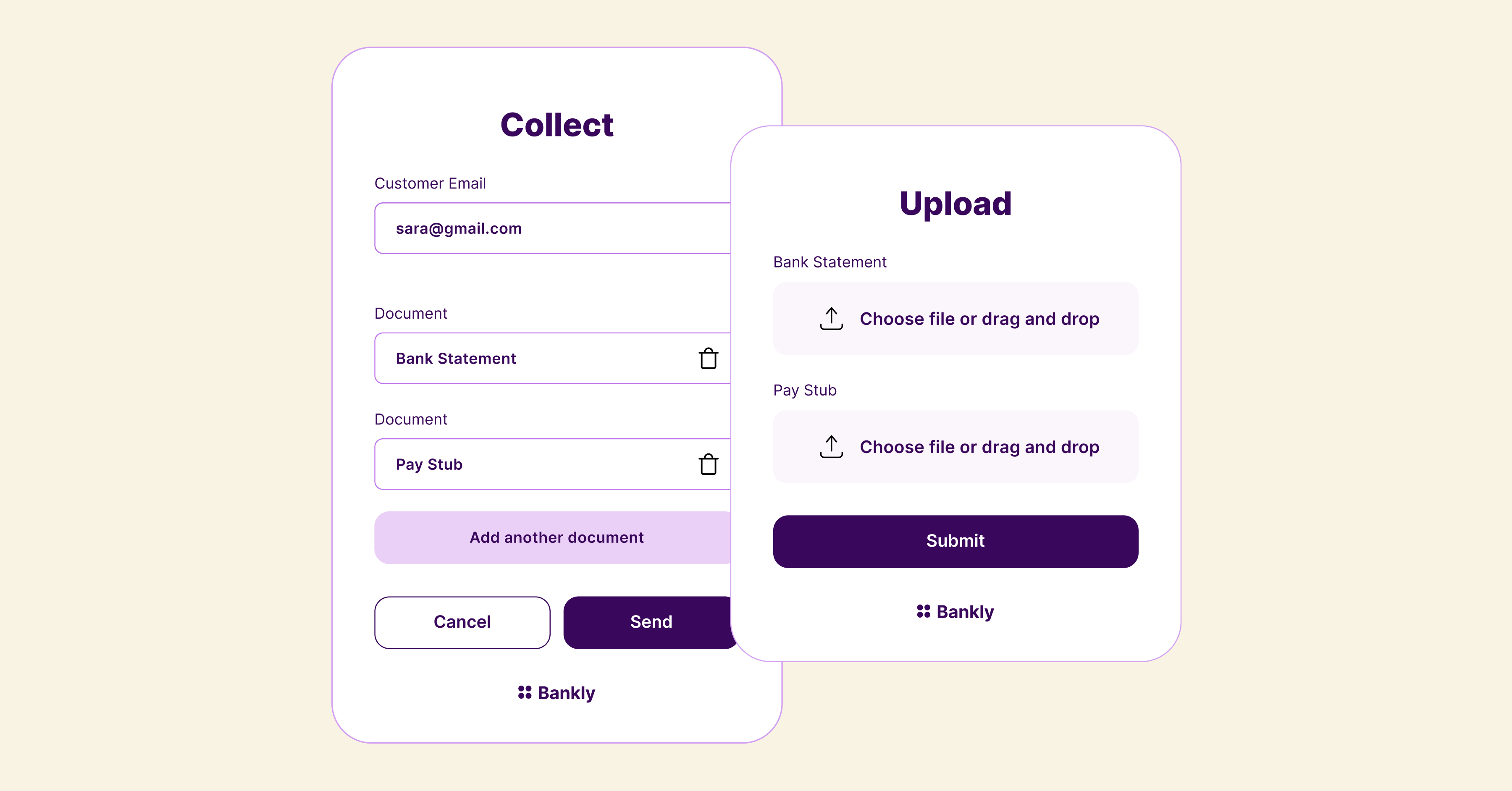
Document collection isn't just about receiving files. It's the first step in every fraud investigation. Collect helps teams:
- Securely request documents from applicants
- Reduce back-and-forth by validating uploads before submission
- Automatically begin document fraud detection the moment documents arrive
- Create a faster, more consistent onboarding experience
Instead of treating document collection and fraud detection as separate workflows, Collect connects them into one continuous experience.
How Collect works
Create a branded document collection experience
Collect can be customized with your organization's logo, colors, and messaging so applicants experience a seamless extension of your existing application process. Whether applicants upload documents through email, a secure link, or an embedded experience, the workflow remains consistent and fully branded.
Securely request applicant documents
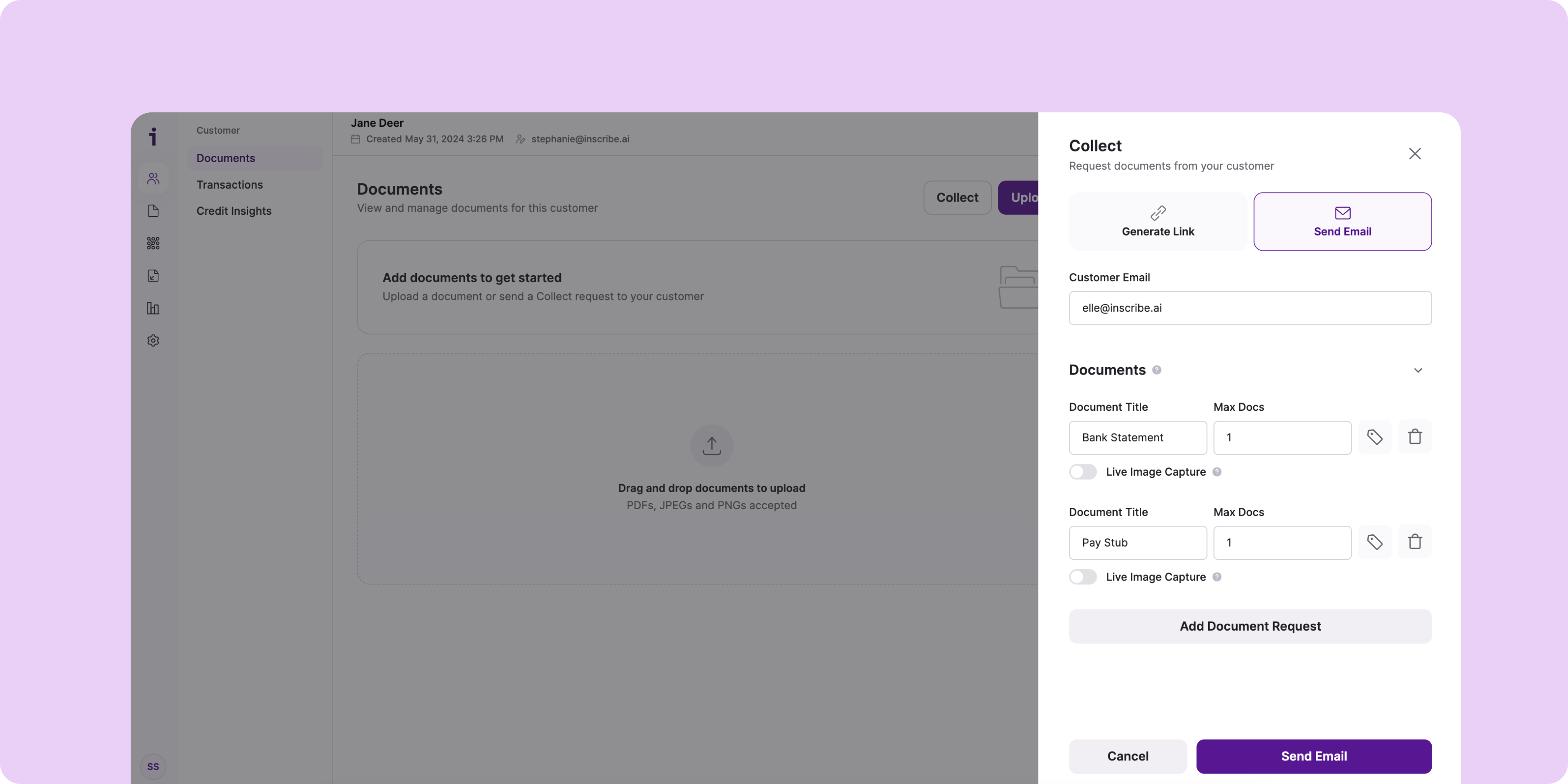
Collect makes it easy to request documents from applicants in just a few clicks. From the customer view in Inscribe, select Collect, choose the documents you need, and either send the request by email or generate a secure shareable link.
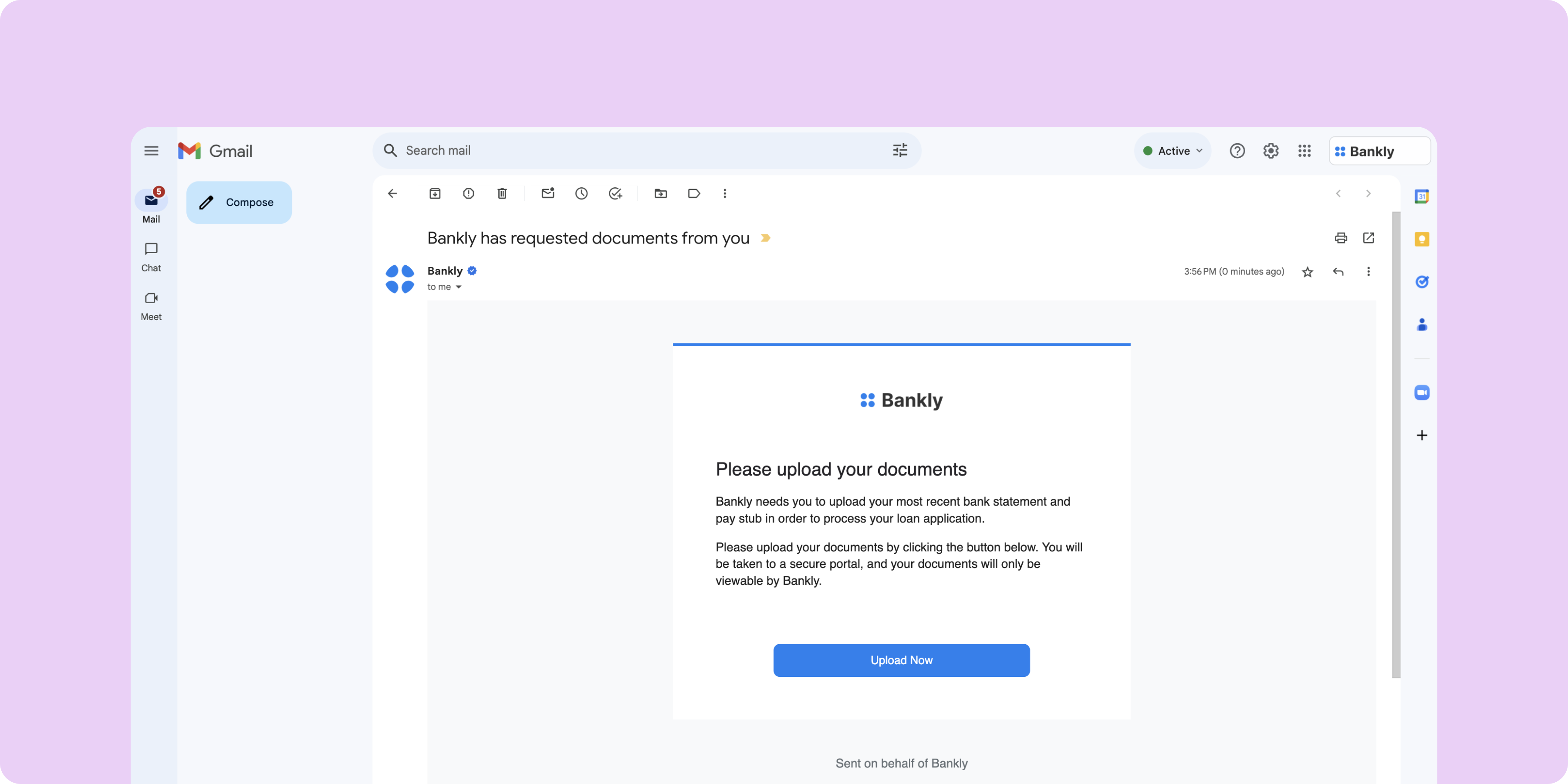
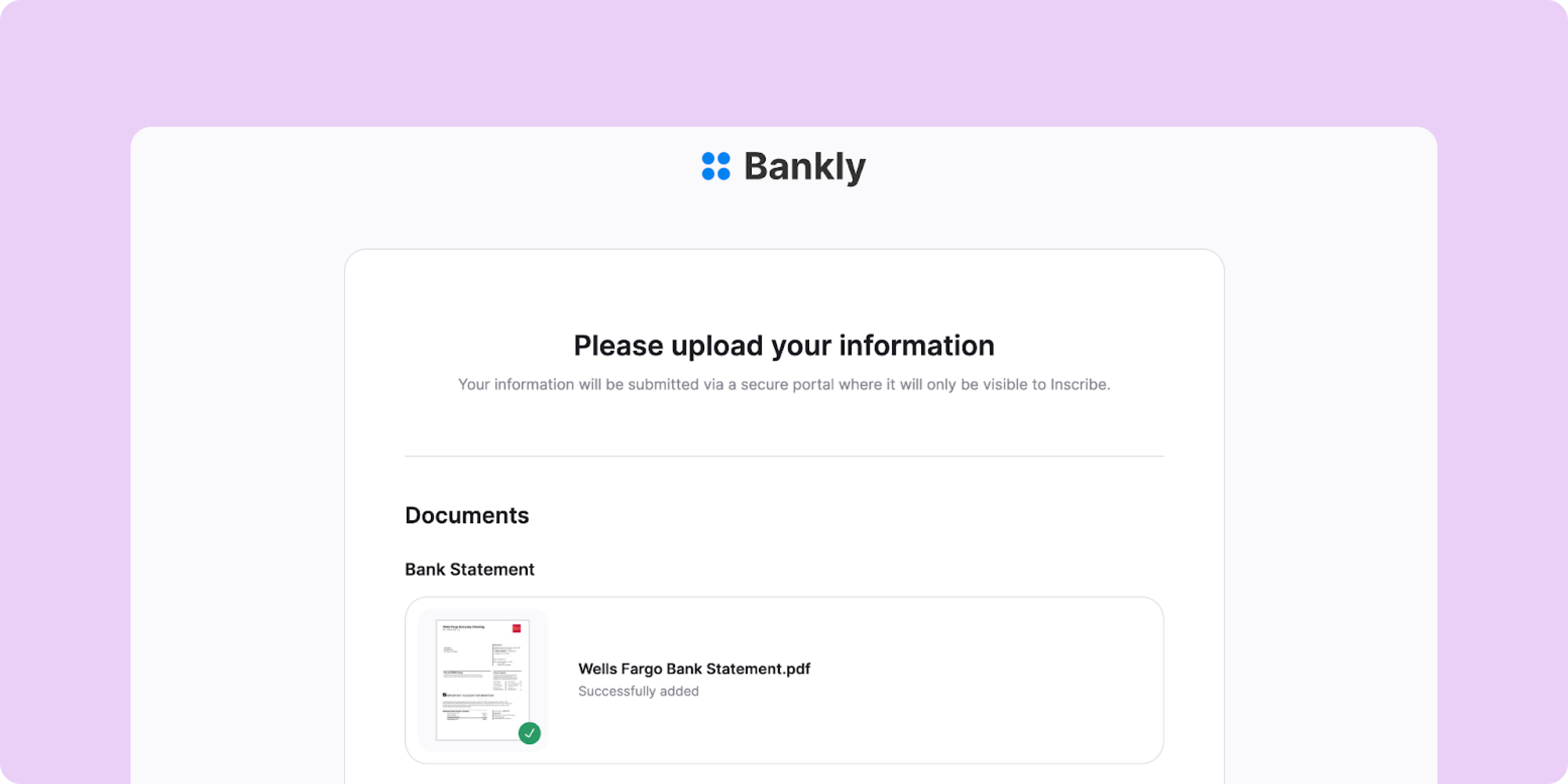
Applicants receive a secure upload request by email or through the shareable link. From there, they can upload the requested documents directly into your branded portal.
The portal is designed to reduce back-and-forth by validating uploads before they're submitted. You can require documents to meet specific criteria, such as:
- Bank statements issued within the last 90 days
- Specific document types
- Accepted file formats
If a document doesn't meet your requirements, applicants receive immediate feedback explaining what needs to be corrected before submitting. That means fewer follow-up emails, fewer incomplete submissions, and a faster onboarding experience for both your team and your applicants.
Begin fraud detection immediately
The moment documents are submitted, Inscribe begins analyzing them using layered document fraud detection. Documents are screened for manipulation, AI-generated content, forensic inconsistencies, reused templates, repeated balances, and other fraud signals before reviewers ever open the application.
Instead of manually reviewing every document, analysts receive a clear risk assessment with supporting evidence that helps them investigate faster and make more confident decisions.
Collect can also be integrated directly into your existing workflow using our API or embeddable iFrame, creating a seamless document collection experience without requiring applicants to leave your application.
Secure document collection is just the beginning
Collect is the front door to Inscribe's document fraud platform. After documents are submitted, teams can:
- Detect document fraud using layered AI-powered analysis
- Review document and customer risk assessments
- Investigate fraud signals with Assistant
- Apply custom fraud policies through Decision Engine
Everything happens in a single workflow, helping teams reduce manual work while improving fraud detection.
How Gig Wage reduced onboarding by two days with Collect
Challenge
Gig Wage relied on a manual onboarding process that required employees to individually request documents, follow up with applicants, and manually review every submission. The result was slower onboarding, increased operational work, and unnecessary fraud risk.
Solution
Gig Wage integrated Collect directly into its onboarding workflow using Inscribe's API. Applicants could securely upload documents through a self-service experience while Inscribe automatically validated document requirements and began screening submissions for fraud immediately after upload. Instead of managing document requests manually, the fraud team could focus on reviewing high-risk applications.
Results
Using Collect, Gig Wage:
- Reduced onboarding time by 2 days
- Achieved an 80% response rate to document requests
- Eliminated more than 30 minutes of manual work per application
- Saved over 150 hours annually
- Improved applicant experience while strengthening fraud detection

Ready to streamline secure document collection and detect document fraud faster? Speak with a member of our team.
FAQ

Secure document collection is the process of requesting and receiving customer documents through an encrypted portal instead of email. Modern document collection software also validates uploads, protects sensitive information, and routes documents directly into fraud review and onboarding workflows.
Document collection software helps organizations securely request, receive, validate, and organize applicant documents. Many platforms also automate reminders, verify uploaded documents against submission requirements, and integrate directly into onboarding and underwriting workflows.
Banks can securely collect customer documents through branded upload portals that encrypt files during transmission and storage. Collect also validates document requirements before submission and immediately begins document fraud analysis once files are uploaded.
Secure document collection reduces applicant drop-off by eliminating unnecessary back-and-forth. Self-service upload portals, branded experiences, and real-time validation help applicants submit the correct documents the first time, creating a faster and smoother onboarding experience.
Yes. Collect validates uploaded documents against your submission requirements before applicants complete the upload process. For example, you can require recent bank statements, accepted file formats, or specific document types, reducing delays caused by incomplete or incorrect submissions.
Once documents are submitted, Inscribe immediately begins analyzing them using layered document fraud detection. Documents are screened for manipulation, AI-generated content, forensic inconsistencies, reused templates, repeated balances, and other fraud signals before analysts begin their review.
Yes. Collect can be integrated using our API or embedded directly into your existing application using an iFrame, allowing applicants to securely upload documents without leaving your onboarding workflow.
Yes. Collect is designed to securely collect sensitive applicant documents while integrating directly into Inscribe's document fraud platform. For more information about our security practices, certifications, and subprocessors, visit our Trust Center.
About the author
Stephanie Spangler is the Head of Product Marketing at Inscribe, where she covers AI-powered fraud detection, document risk, and how financial institutions are adopting agentic AI. She writes on the intersection of product and practice — translating what fraud detection technology does into what it means for the risk teams using it.
What will our AI Agents find in your documents?
Start your free trial to catch more fraud, faster.