

What happens when AI document fraud goes undetected?
Table of Contents
[ show ]- Loading table of contents...


At Inscribe, we publish a lot of data about document fraud, as we believe the industry is better served by honest numbers than vague AI warnings.
As we recently shared on our podcast, the number of documents flagged as AI-generated across our network has grown roughly 4x over the past 11 months.
The most recent months represent new highs, with the trajectory continuing upward. Bank statements are the primary target (roughly one in four AI-generated flags), with invoices and payslips each representing a similar share.
A steady escalation, exactly the kind that's easiest to underestimate.
But today I want to write about something the data doesn't capture.
What AI has actually changed about fraud
The story of AI fraud isn't that AI makes perfect fakes. Most AI-generated documents still have tells. Jessica Lara, Inscribe's Risk Operations Analyst, reviews flagged documents every day. She describes the signature: bank statements that look like they were built in Microsoft Excel: table-like formatting, rounded numbers, transactions that say "groceries" instead of "Walmart." Real bank statements are messier. AI cleans them up, and in doing so, reveals itself.
But the trajectory matters more than the current tells.
"Last year, AI documents looked almost painfully fake," Jessica told me. "Now, you almost have to be a seasoned fraud investigator, and have some sort of tool, to know it's fake."
Eighteen months from obviously fake to genuinely difficult to catch. That pace doesn't plateau.
The more unsettling development is the AI-edited document. Not generated from scratch, but a real, legitimate document with AI-altered fields. A genuine pay stub with the income changed. A real bank statement with the balance inflated. Everything structural is correct because it started from a real document. Jessica puts it directly: "The more troubling documents I tend to come across are not the ones that have been generated using AI from scratch, but the legitimate documents that fraudsters use AI to alter. Everything looks perfect and as expected."
We can't yet measure the split between generated and edited in our data. That's a 2027 priority. But the operational implication is already clear: visual checks aren't enough. Catching AI-edited documents requires knowing what a genuine document from a specific institution is supposed to look like, field by field.
Why bank statements?
Bank statements are the dominant target for a straightforward reason: they're the key that unlocks everything else.
"Bank statements are the definitive source of truth for income verification," Jessica explains. "You're almost always required to provide one if you're applying for any sort of financial product. And if you have a good fake bank statement with inflated income, you could really be off to the races."
Their uniformity makes them ideal for AI generation: a consistent structure that AI can replicate convincingly. A fake invoice or lease has more variation, more room to get caught. Bank statements have a standard format, and they're the document that unlocks everything that follows: credit approvals, high-value credit lines, business financing.
How the barrier dropped to almost nothing
Here is the part I don't think the industry has fully reckoned with yet.
Document fraud used to require skill. Not a lot, but enough friction to filter out casual opportunists. That friction is almost entirely gone.
What previously took time and technical effort now takes a ChatGPT prompt and a few minutes. Fraud rings are still real, still organized, still sophisticated. But alongside them, a new category has emerged: the opportunistic first-time fraudster. Someone who passed every KYC check at origination. Someone who would not have committed fraud two years ago, because it would have taken more than they were willing to put in.
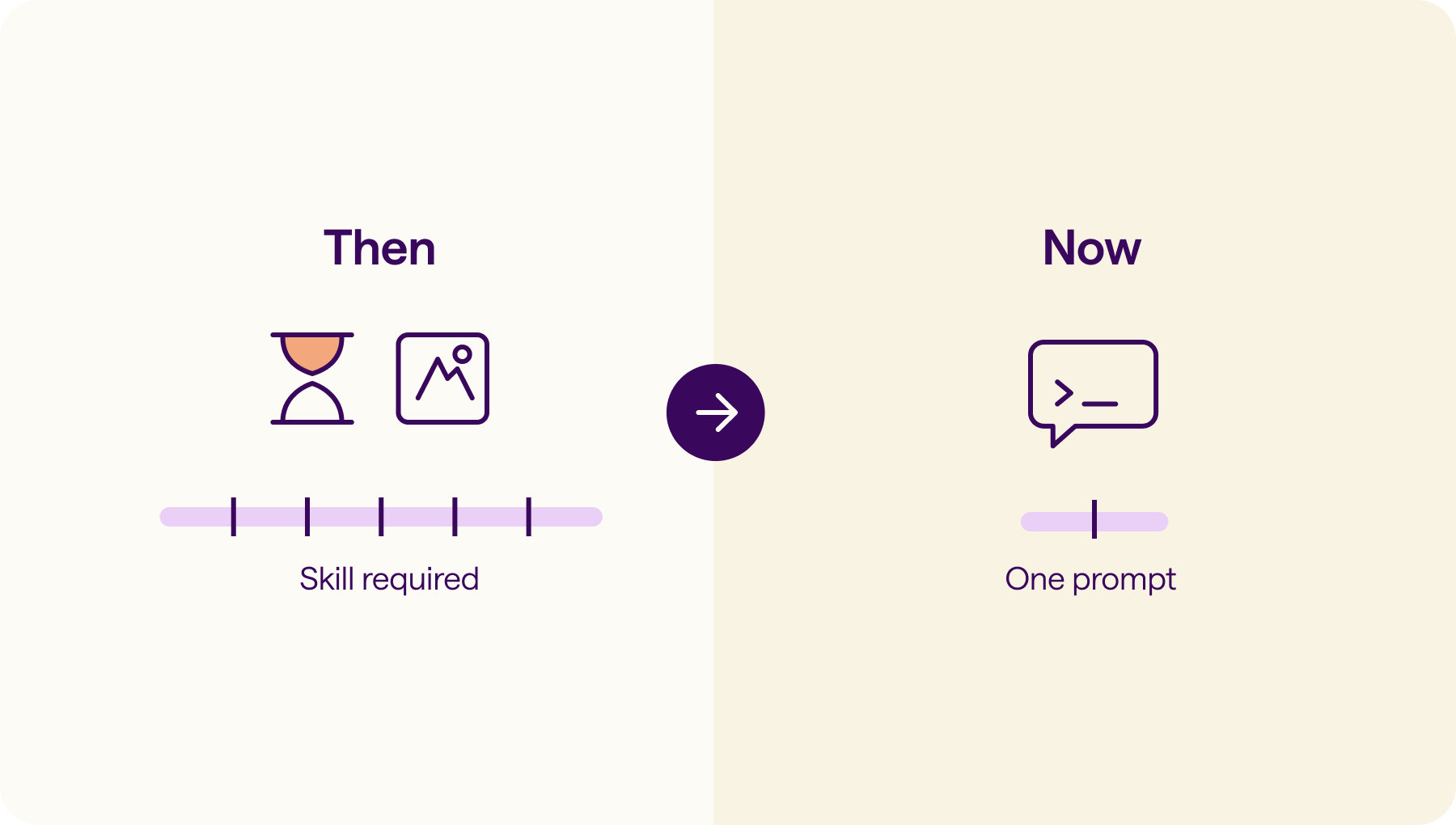
Jessica described it: "The barrier to entry for committing fraud is at an all-time low. Something that used to take time and technical skill now can be done in minutes by somebody who has no skill at all."
This blurs a line fraud teams have historically relied on. Credit risk and fraud risk used to be mostly separable: fraud was deliberate deception, credit risk was a customer who couldn't repay. Now they aren't. A customer who cleared application review might reach for an AI tool to inflate their income on a renewal. That's a credit risk that became a fraud risk because the technology made it trivial.
An earlier episode of Good Question with Alloy Co-Founder Laura Spiekerman identified this dynamic (money mules, scams, the blurring of first-party fraud) as one of the defining fraud shifts of 2025. The AI accessibility question accelerates every part of it.
What happens when a fake loan document is approved?
Most fraud coverage ends at detection. What comes after deserves more attention.
When a fraudulent loan is funded, the money moves immediately. Through layered accounts, across institutions, often dispersed before application review has finished. Las Vegas Financial Crimes Detective Marc Evans spent six years working document fraud cases. He described what he saw on Good Question: fraud rings that begin with a single fake bank statement and escalate through mail theft, auto theft, identity fraud, and organized crime within a single investigation. "By the time a case lands on a detective's desk, the money is usually gone."
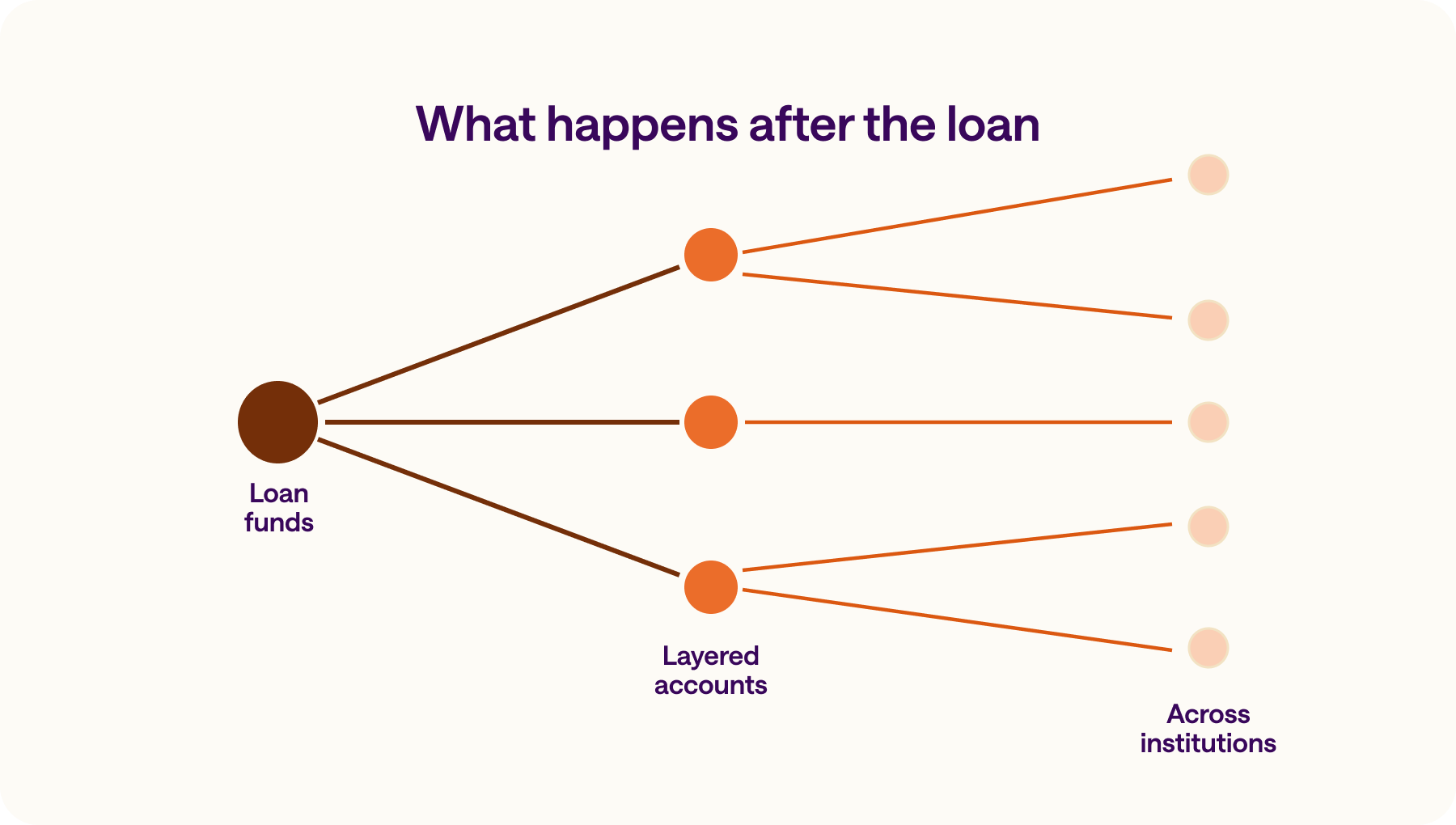
That's the design.
It plays out in individual cases too, not just rings. In one BCU investigation, a $75,000 auto loan was stopped because a bank statement flagged a fingerprint mismatch. One signal. The document traced back to a Florida fraud ring that had been operating for years, submitting applications across multiple institutions with templates polished enough to clear manual review elsewhere. That detection became one of several that helped BCU prevent $80 million in fraud losses.
A convincing fake bank statement doesn't only unlock a loan. In the hands of the right network, it creates a person who doesn't legally exist, or establishes false legitimacy for someone whose life is being controlled by someone else. The document is the same. The operation behind it may be something else entirely.
Organized fraud rings run coordinated attacks across multiple institutions simultaneously. The same identities against different lenders. Layered accounts. Quick dispersal. By the time any one institution has flagged the pattern, the ring is already moving to the next target.
We've documented this at Inscribe. In one case, a fraud ring submitted 10 documents across two lending customers in a single day, all stripped of their digital watermarks as a deliberate evasion technique. A detector update caught every document. But what stays with me is how many other institutions ran the same documents and didn't.
In another case, a ring circulated realistic fake bank statements from a major national bank. Convincing enough that early review passed. 39 documents cleared before the pattern was identified. The week after a targeted detector was deployed, 43 additional submissions from the same ring were stopped.
Catching a fraud ring at one lender doesn't stop it
The ring continues until detection is network-wide.
Prosecution compounds this. Fraud at this scale crosses jurisdictions, overwhelms case volume, and runs into a system not designed for financial crime at this velocity. Most document fraud doesn't end in conviction. Investigators are capable; the infrastructure wasn't built for this volume.
The victims are worth naming. Lenders absorb losses that eventually get passed to every borrower through tighter requirements and higher costs. Legitimate borrowers face stricter screening as fraud rates rise, paying a price for fraud they didn't commit. And some AI-edited documents started as real ones: someone's genuine pay stub, scraped and altered. The identity theft rarely makes headlines, but it's present in every case.
In cases where document fraud is serving larger criminal networks, the harm runs deeper. Trafficking victims whose documents are being fabricated to establish false employment. People whose financial histories are being manufactured not to secure a loan but to create cover for operations they have no control over. The financial crime is the visible surface. What lies beneath it often isn't.
The template evolution
Template fraud has historically been one of the most common fraud vectors. The tell is repetition: the same formatting artifacts, the same layout quirks, across dozens of submissions to multiple lenders. Cross-institution pattern matching works because templates are shared.
AI breaks that pattern.
"With the help of AI, you can create unique documents that don't share repeated characteristics, and you can create them at scale," Jessica explains. "What will happen is that online template stores are going to pivot toward generating templates using AI, and also leveraging AI to edit templates that were previously just static images."
When every submission is unique, the network effect that makes templates detectable starts to erode. This makes cross-institution intelligence more important. Single-document analysis alone won't reach it.
Why fighting document fraud matters
I'm not writing this to make the problem feel hopeless. I'm writing it because the scale of what we're up against is exactly why this work matters, and the people doing it deserve to see that clearly.
When detection works, it doesn't just stop one loan. It disrupts an operation. Sometimes that operation is financing something much worse than the loan application suggests.
Fraud rings strip metadata from documents before submission because they know it's being checked. They're moving away from static templates because repeated characteristics get caught. Sophisticated actors are migrating to open-source models and purpose-built tools like FraudGPT because detection is getting better. Every evasion technique is evidence that the detection is working.
The arms race is real. But it isn't symmetric. Fraudsters can generate documents. They can't generate network intelligence. When coordinated attacks are flagged across multiple institutions simultaneously, the advantage is identifying a pattern that exists across an entire network. That intelligence belongs to everyone in it.
Institutions that share intelligence catch more fraud. Isolation costs everyone. Document fraud works partly because most institutions don't know what's happening at their neighbors. That's changing, though not fast enough.
Template fraud still runs at a rate 2 to 3x higher than AI-generated fraud. The full spectrum of document manipulation is evolving in parallel, AI and traditional methods alike.
And at the center of every detection is a person (a Risk Ops analyst, an underwriter, a fraud investigator) who saw something that didn't look right and followed it through.
That frontline fraud fighter wakes up every morning making our financial systems safer, and more fair, and we at Inscribe are proud to fight alongside them.
About the author
Ronan Burke is the co-founder and CEO of Inscribe, where he has spent nearly a decade studying how fraud evolves and what it takes to stop it. His work sits at the intersection of generative AI and financial crime: specifically, how AI-powered reasoning can outpace the fraud tactics that have already outrun rules-based detection. He writes and speaks regularly on document fraud, agentic AI, and what it means to build fraud defenses for a world where fakes are cheap, fast, and convincing.
What will our AI Agents find in your documents?
Start your free trial to catch more fraud, faster.