Stop fraudulent accounts before they're opened
Fraudsters are targeting account opening with fake identities, fabricated business documents, and AI-generated proofs of address. Inscribe detects them in seconds with clear, explainable findings. Here's what your team is up against.
1 in 16
1 in 16 documents submitted in financial services show signs of manipulation or fabrication.

5x
AI-generated document fraud increased 5x from last year, and growth has continued into 2026, reaching new all-time highs.

3x
Template-based fraud has grown 3x, with fraudsters reusing the same document structures across hundreds of applications.
Why teams use Inscribe for account opening (KYC/KYB)
Inscribe gives account opening teams the detection depth, decision speed, and configurability to stop fraudulent accounts without slowing down good applicants.
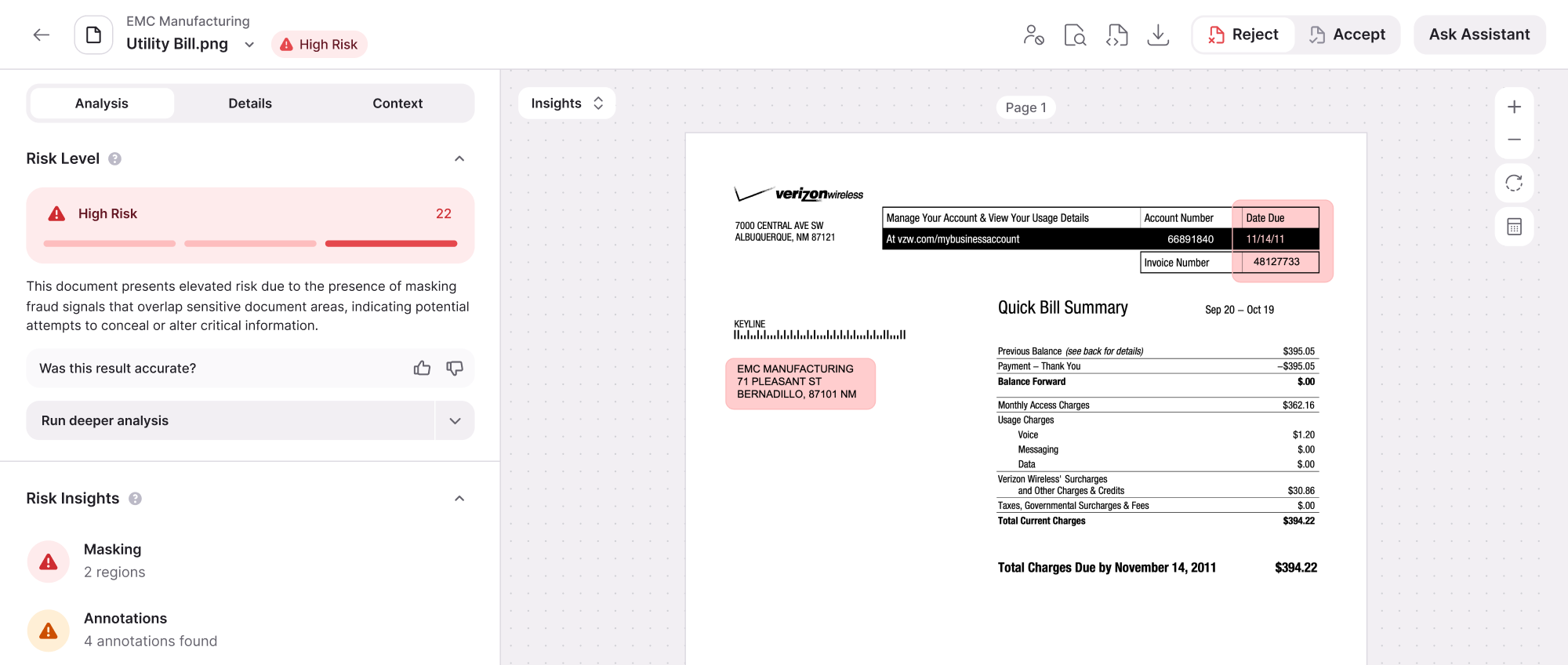


Catch fraud before a bad actor gets through the door
Fraudsters are using increasingly convincing documents to open fraudulent accounts. Inscribe uncovers them with layered detection before they reach your business.
Make faster decisions your team can stand behind
Slow onboarding loses good customers. Every finding is backed by supporting evidence and plain-language explanations, helping your team make faster, more confident decisions.
Go beyond the document to verify what's real
A document is only part of the story. Inscribe enriches every application with public data on people, businesses, and addresses to uncover customer risk beyond the document itself.


23%
$1,000+
Inscribe was able to identify fraud on incredibly realistic documents. It’s helped open our eyes to the new risks faced by our industry as fraudsters become even more sophisticated.


Every document type your team reviews, covered
Inscribe's detectors are purpose-built for the exact document types your account opening team reviews every day, not adapted from generic tools.

Take an interactive product tour

Watch a recorded demo
The impact of missed fraud
Fraudulent documents don't just create losses — they fund organized fraud rings and, in some cases, far more serious crimes. AI is making these operations faster and harder to stop.
Our 2026 report covers the latest trends, the impact behind document fraud, and how fraud fighters are staying ahead.
Want to see what’s hiding in your applicant documents?
Book a demo and we'll share more about our complimentary document fraud audit.

FAQs

Document fraud detection helps banks, fintechs, and credit unions identify altered, fabricated, or AI-generated documents submitted during KYC and KYB before fraudulent accounts are opened.
Inscribe detects altered documents, AI-generated documents, fabricated business filings, manipulated utility bills, fake bank statements, identity document fraud, template fraud, screenshots, and many other fraud techniques.
Inscribe analyzes every document using multiple layers of forensic, semantic, perceptual, and network analysis, providing explainable findings and supporting evidence for every fraud signal.
Yes. While synthetic identity fraud involves multiple data sources, Inscribe helps identify fraudulent or manipulated documents commonly used to support synthetic identities during onboarding.
Yes. Inscribe analyzes consumer and business documents submitted during customer onboarding, helping automate both KYC and KYB document reviews.
Bank statements, business registrations, utility bills, tax forms, identity documents, financial statements, pay stubs, invoices, and many other financial documents.
Yes. Risk findings are prioritized by severity and explained in plain language, allowing analysts to investigate suspicious applications significantly faster.
Most documents are analyzed within seconds, allowing legitimate applicants to move through onboarding while suspicious submissions are flagged for review.
Yes. Inscribe integrates through APIs and partner platforms, making it easy to add document fraud detection to existing onboarding workflows.
AI-generated document fraud continues to become more sophisticated. Financial institutions use AI-powered document fraud detection to catch fraud that manual review and traditional rules-based systems often miss.