

Inscribe + Oscilar: Turning document fraud signals into automated risk decisions
Table of Contents
[ show ]- Loading table of contents...


When you use Inscribe alongside a risk decisioning platform like Oscilar, each platform plays a different role. Inscribe analyzes documents for signs of fraud and extracts relevant information. Oscilar uses those findings to make risk decisions and determine what happens next.
Until now, connecting the two meant extra manual work. Someone had to send the applicant a document upload link, review the results in Inscribe, and enter the relevant information into Oscilar before the case could move forward.
Our new integration with Oscilar brings document fraud detection directly into the Oscilar workflow. Document requests can be triggered automatically, findings flow back into the case, and trusted signals can help automate downstream decisions.
The old way: two tools, one manual process
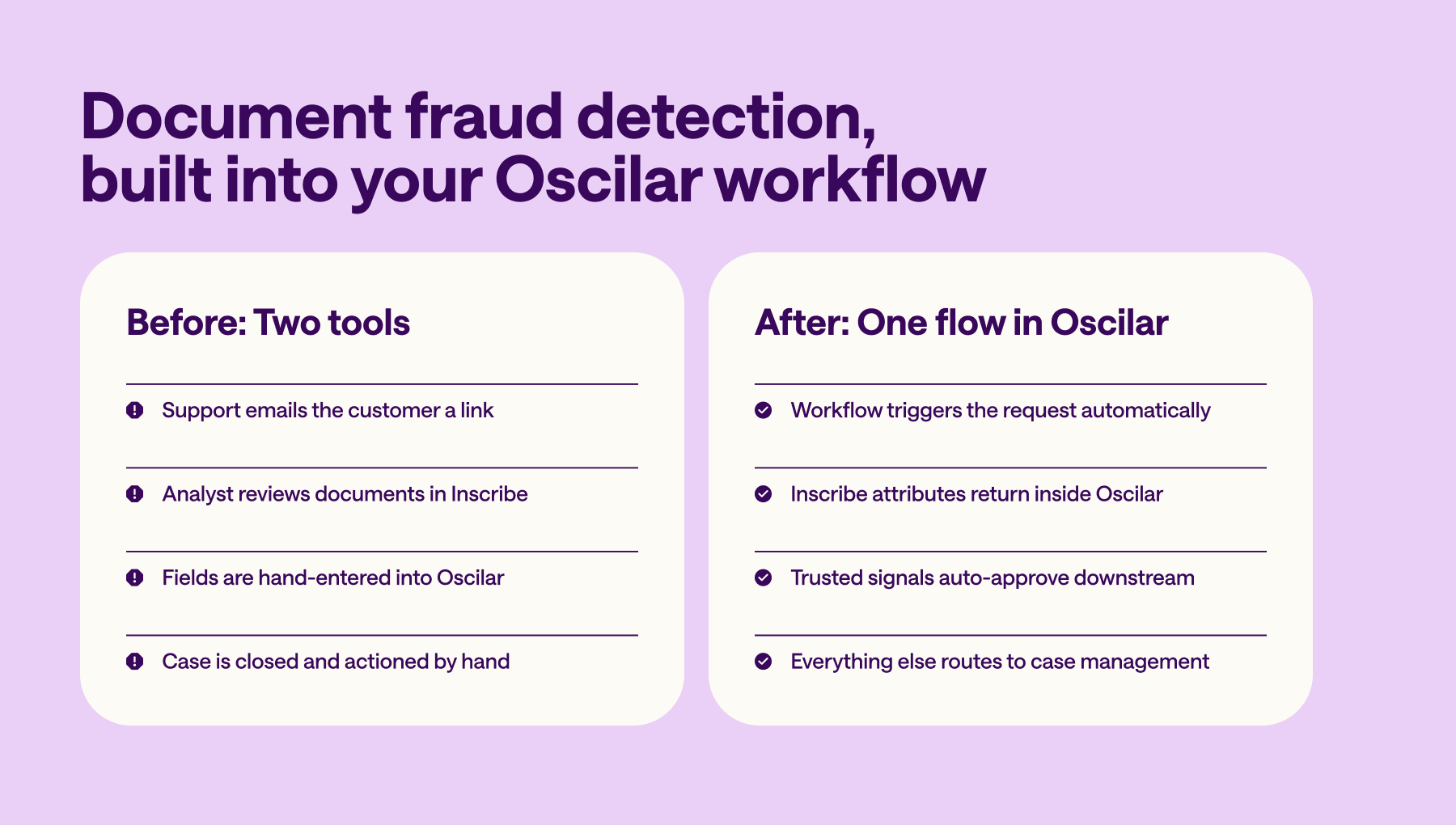
Before the integration, teams using both platforms had to bridge the gap themselves. Support would send the applicant a link to upload a bank statement. An analyst would review the document in Inscribe, then manually enter the relevant findings into Oscilar before closing the case or deciding what should happen next.
Each step added work. Analysts had to switch between tools, transfer information, and keep cases up to date. Even when Inscribe had already identified the signals needed to make a decision, someone still had to move that information into Oscilar to act on it.
The new way: one workflow in Oscilar
With the integration, the process happens directly within Oscilar. The workflow triggers a document request automatically, and Oscilar sends the applicant an upload link through Inscribe. Once the document arrives, Inscribe analyzes it for signs of tampering and extracts relevant financial attributes. Those findings and attributes then return to the same Oscilar case, ready for the team's existing rules and workflows to use.
From there, the case can move forward automatically. Trusted signals can trigger an approval when the case meets the required criteria. Anything that needs a closer look routes to case management, where analysts can review the document and findings alongside the rest of the case information.
No manual data entry. No switching between systems to retrieve findings. And no need to wait for someone to update the case before the next step can happen.
Inscribe still handles document analysis, and Oscilar still handles risk decisioning. The difference is that the findings now feed directly into the workflow, helping teams move from document review to a decision with less manual work.
What this looks like in practice
Coast, an Inscribe and Oscilar customer, has used the integration to cut document review time by more than 50%.
And when a case meets the criteria for an automated decision, teams can go a step further and remove manual review altogether. Trusted results can trigger downstream approvals, while cases that need attention are routed to case management.
The integration requires no code to set up. Document requests, analysis, and decisioning all happen within one connected workflow, with Inscribe's document fraud detection built directly into Oscilar.
About the author
Stephanie Spangler is the Head of Product Marketing at Inscribe, where she covers AI-powered fraud detection, document risk, and how financial institutions are adopting agentic AI. She writes on the intersection of product and practice — translating what fraud detection technology does into what it means for the risk teams using it.
What will our AI Agents find in your documents?
Start your free trial to catch more fraud, faster.


