
Document fraud caught anywhere protects customers everywhere
We pioneered document fraud detection and have analyzed millions of applications across leading North American banks, lenders, and fintechs. Every new fraud pattern we uncover strengthens our document consortium, helping protect every financial institution that uses Inscribe.




A network that gets sharper every day
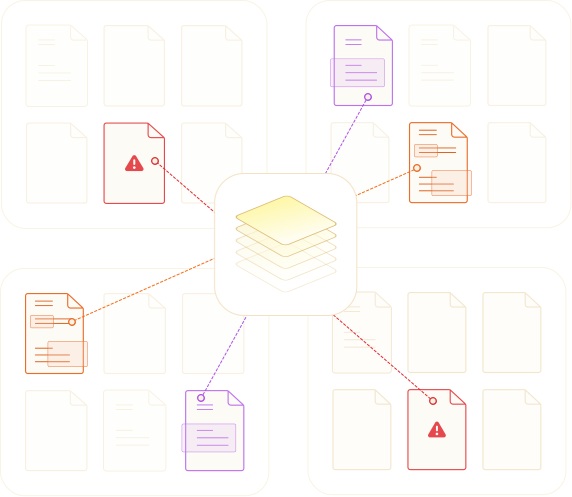
Our document consortium isn’t just a database of known fraud. Every document, template, and decision that runs through Inscribe makes the next call more accurate, for every organization using it.
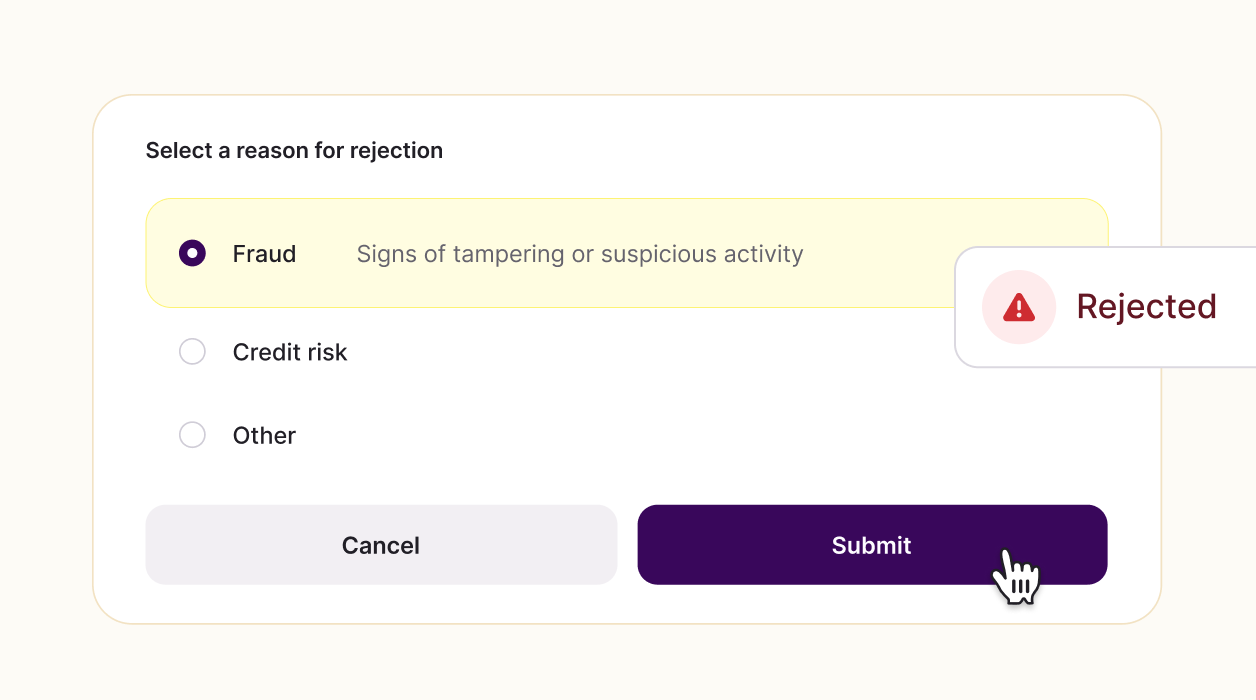
Signals powered by our vast document consortium
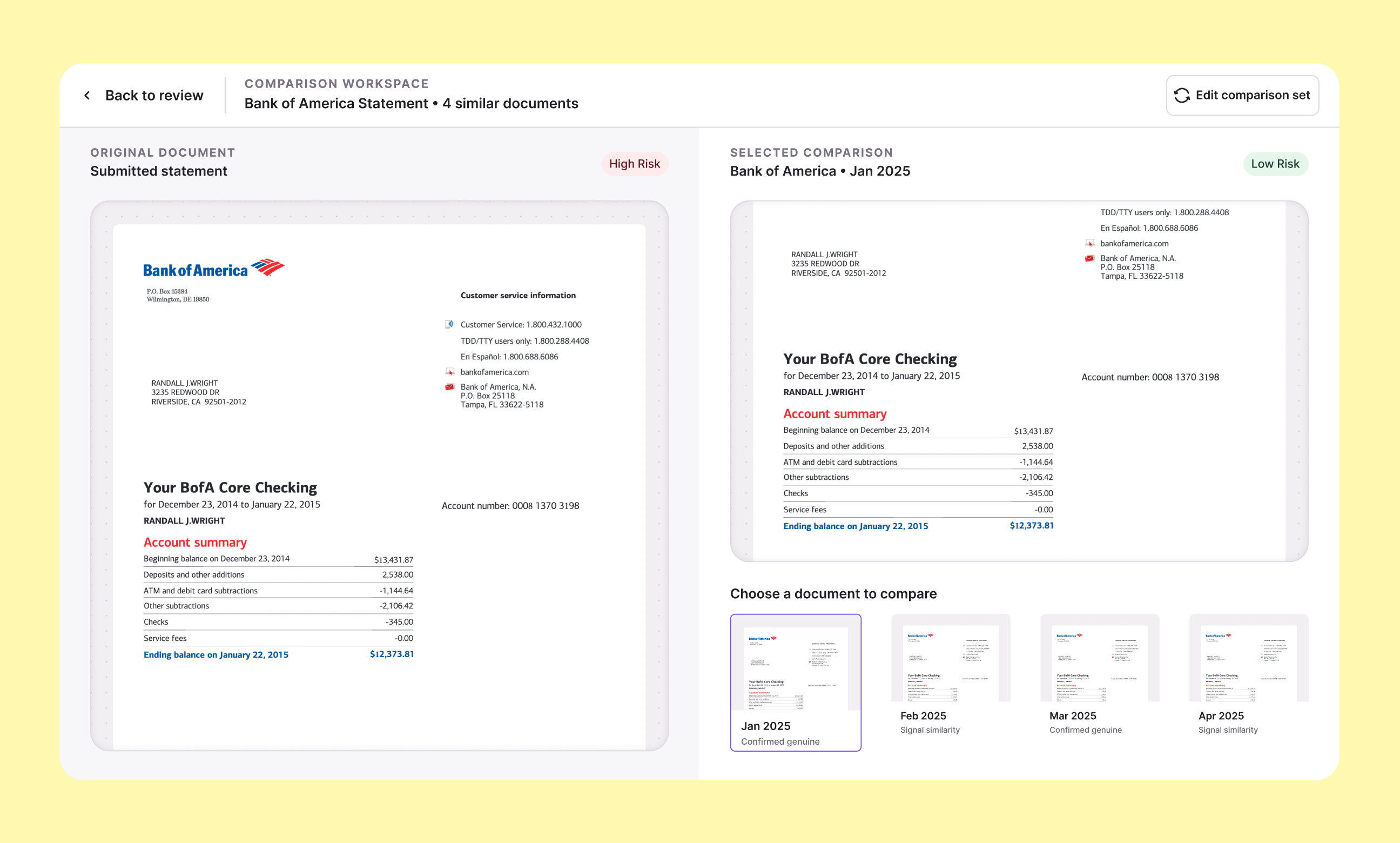
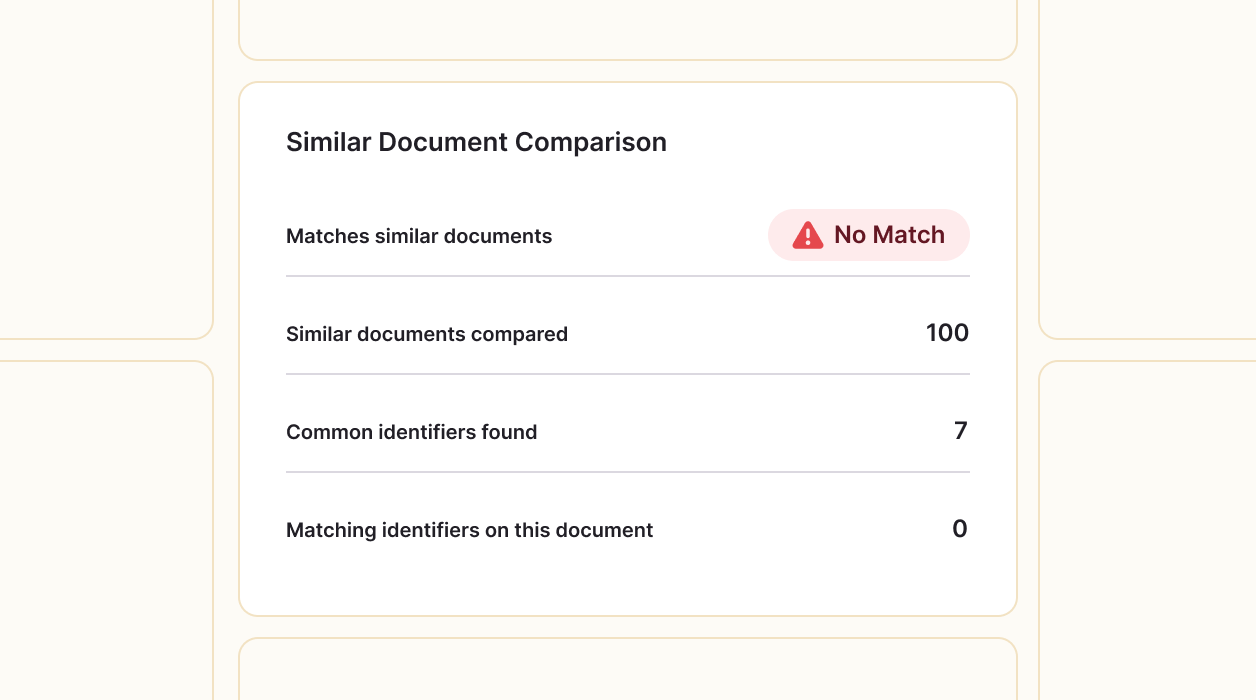
Every document gives Inscribe more context on what genuine and fraudulent documents look like, helping us continuously improve detection accuracy and effectiveness as our network grows. More than 30% of our detectors rely entirely on network signals.
A template library that keeps growing
When we learn a new document format at one institution, every other institution gets it too. So your team benefits from every document format we’ve seen, even if it’s the first time you’ve encountered it. That means new formats become part of the network for everyone.
Calibrated by real-world decisions
When analysts review Inscribe’s decisions, that feedback helps our detectors distinguish genuine anomalies from acceptable variation, making future decisions more precise. 8 of our 20 most prevalent detectors are powered by network signals.
Network signals we check for every document
Inscribe draws on patterns across millions of applications to uncover connections and inconsistencies that are difficult to spot in isolation.
Authenticity signals
Does it match the source?
Detect when a document doesn't match what the institution it claims to come from actually issues. Inscribe compares it against the characteristics of real documents from that bank.
Repetition signals
Does it match the source?
Detect when a document doesn't match what the institution it claims to come from actually issues. Inscribe compares it against the characteristics of real documents from that bank.

20M+
Unique identities represented

1,000+
Bank statement subtypes identified

400K+
Employers represented in payslips

90K+
Documents detected as templates
More context leads to better fraud detection
The more Inscribe understands about documents and how they’re used, the better we can distinguish meaningful anomalies from harmless variation, even when other signals are limited.

Detect sophisticated fraud
Layered detection and network-wide context help Inscribe uncover fraud that can evade approaches relying on a narrower set of signals.

Go beyond metadata
Many document fraud solutions rely heavily on file metadata to identify manipulation. Inscribe gives you a deeper layer of detection that doesn’t depend on metadata being present or suspicious.

Catch fraud without the noise
By understanding legitimate variations across documents, Inscribe can better separate suspicious activity from what’s simply unusual, while also surfacing positive signals that help validate legitimate documents.
Take an interactive product tour

Watch a recorded demo
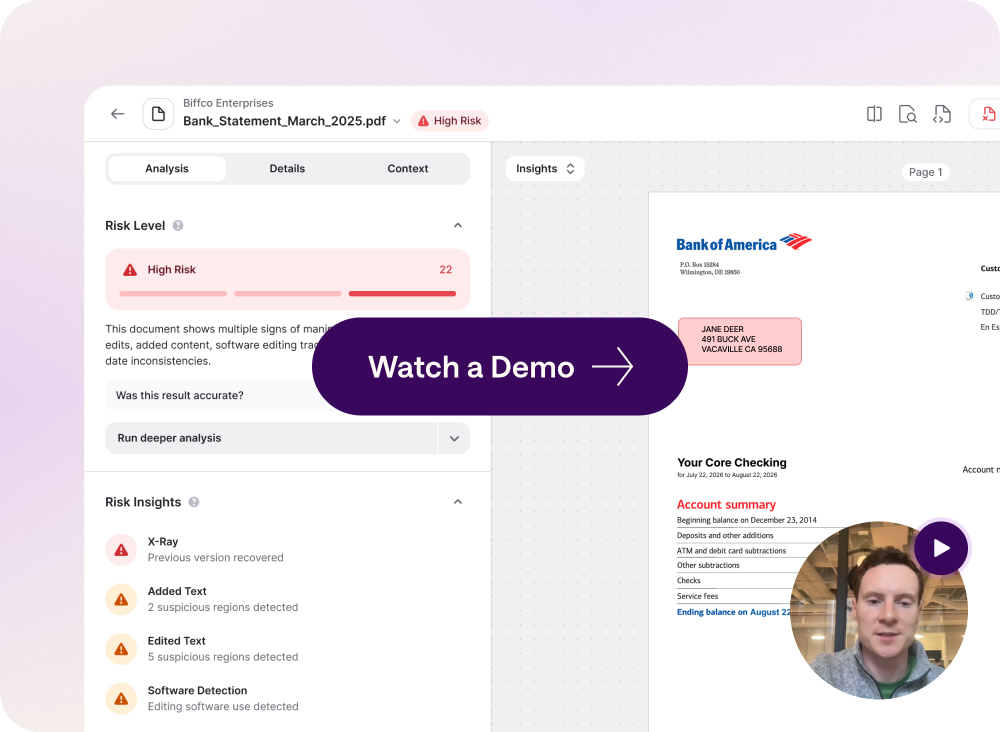
Want to see what’s hiding in your applicant documents?
Book a demo and we'll share more about our complimentary document fraud audit.

FAQs

Document fraud detection is the process of identifying falsified, altered, or fabricated documents before a decision is made on them. It covers fake bank statements, pay stubs, tax forms, business filings, and many other document types. Modern document fraud detection uses AI to analyze a document's structure, content, and appearance rather than relying on manual review, which struggles with forgeries that look legitimate at a glance.
A document fraud consortium is an approach to document fraud detection built on a large body of real-world document intelligence rather than a limited internal sample. Inscribe has analyzed millions of applicant documents across genuine bank statements, pay stubs, tax forms, and other document types, helping it recognize what legitimate documents actually look like and what fraudulent ones don't. 30%+ of our detectors rely entirely on the network effect, and 8 of our 20 most prevalent detectors are powered by network signals.
Detection accuracy depends on the size of the reference set behind it. With millions of real applications analyzed, Inscribe has far more points of comparison than any single review process, so it can recognize forged templates, recycled layouts, and fabricated documents that would look plausible in isolation.
Inscribe pioneered document fraud detection and has analyzed millions of real-world financial applications across 21M+ unique identities, 1,000+ bank statement subtypes, and payslips from 400K+ employers. That volume builds a detailed picture of how genuine documents are structured, so anything missing or inconsistent stands out.
Inscribe detects altered and fabricated bank statements, pay stubs, tax forms, financial statements, business filings, and many more document types. That includes documents edited with software, documents generated or modified using AI, recycled templates, and documents that don't match what the institution they claim to come from actually issues.
Yes. Inscribe reads and analyzes every document in detail rather than relying solely on file-level signals. Our reasoning layer and many of our detectors use semantic analysis to understand the document’s type, content, and context, helping surface fraud that may not be visible from metadata or other surface-level signals.
False positives usually come from tools treating anything unusual as suspicious. Because Inscribe has analyzed how genuine documents are formatted across millions of applications — including uncommon document types — it can distinguish a meaningful anomaly from harmless variation, so fewer legitimate applicants get flagged for review.
Rules-based systems look for known indicators, often missing new fraud patterns and flagging legitimate documents that trigger a rule. Consortium-based detection learns from real examples across institutions, adapting in real time as document formats change and helping identify fraud while recognizing legitimate variation.
Inscribe is optimized for the financial documents underwriting and onboarding teams review every day, including bank statements, pay stubs, tax forms, financial statements, credit card statements, utility bills, and business filings. While our system is optimized for financial documents, we analyze every document in detail to surface the signals that matter most for identifying fraud.
Inscribe connects via web app, API, its Collect document-gathering tool, or partner integrations with loan origination and orchestration platforms. Documents are analyzed automatically and returned with a risk level. Low-risk documents clear without review, and flagged ones arrive with the supporting evidence already assembled.


